

When a marriage ends, one of the most important—and often most contentious—issues is how property and debts will be divided. In Virginia, this process is known as equitable distribution. Despite what many people assume, “equitable” does not necessarily mean “equal.” Instead, it means fairness can look very different depending on the circumstances of each case.
What Is Equitable Distribution?
Equitable distribution is the legal framework Virginia courts use to divide marital assets and debts during a divorce. The goal is to reach a fair outcome based on a variety of factors, rather than simply splitting everything 50/50.
The process generally involves three steps:
1. Classification of Property
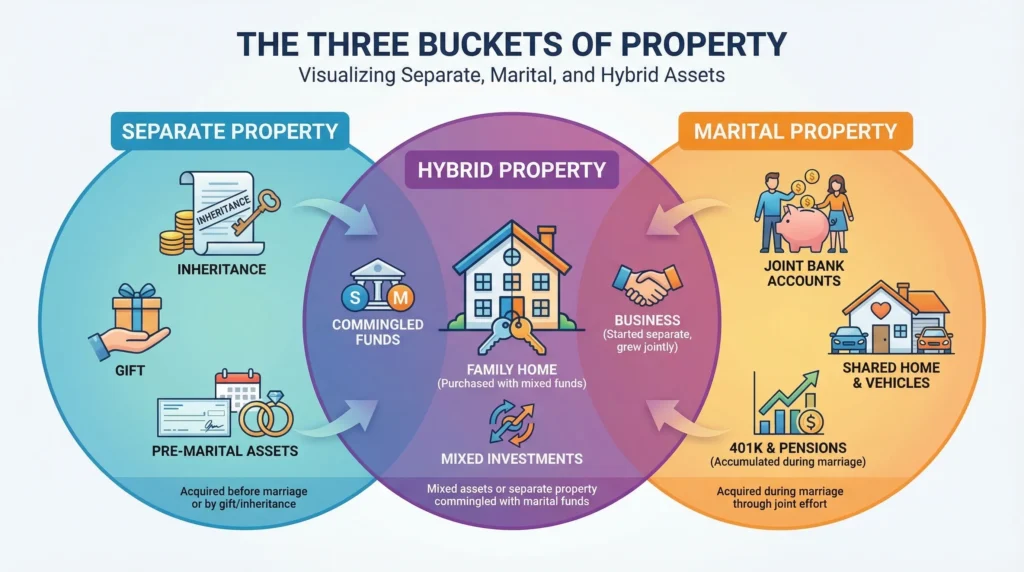
First, the court determines whether property is:
- Marital Property – Assets acquired during the marriage (e.g., income, homes, retirement accounts)
- Separate Property – Assets owned before the marriage or received individually through inheritance or gift
- Hybrid Property – Assets that contain both marital and separate components (very common with homes or retirement accounts)
This step is critical because only marital property is subject to division.
2. Valuation of Assets and Debts
Next, the court assigns a value to each asset and liability. This may involve:
- Appraisals (real estate, businesses)
- Financial statements (bank accounts, retirement plans)
- Expert testimony (for complex or disputed valuations)
The valuation date is typically the date of trial, but courts have some discretion depending on the circumstances.
3. Distribution
Finally, the court decides how to divide the marital estate. Virginia law (Va. Code § 20-107.3) outlines several factors judges must consider, including:
- Contributions of each spouse (both financial and non-financial)
- Duration of the marriage
- Circumstances leading to the breakdown of the marriage
- Debts and liabilities
- How and when property was acquired
- Tax consequences
The result is a distribution that the court believes is fair—not necessarily equal.
How It Works in Practice

In reality, equitable distribution is often a negotiation-driven process. Most cases settle before trial through:
- Separation agreements
- Mediation
- Attorney-led negotiations
However, when parties cannot agree, the court steps in and makes the final decision.
For example:
- A spouse who sacrificed their career to raise children may receive a larger share of assets.
- A spouse who dissipated marital funds (e.g., spending on an affair) may receive less.
- A business owner may keep the business but offset its value with other assets.
The Pros of Equitable Distribution
1. Flexibility and Fairness
Unlike strict 50/50 systems, equitable distribution allows the court to tailor outcomes to real-life circumstances.
2. Recognition of Non-Financial Contributions
Virginia law recognizes contributions such as homemaking, childcare, and supporting a spouse’s career.
3. Ability to Address Misconduct
While Virginia is not a purely fault-based distribution state, certain behaviors (like wasting marital assets) can impact the outcome.
The Cons of Equitable Distribution
1. Unpredictability
Because decisions are based on multiple subjective factors, outcomes can vary widely from case to case.
2. Litigation Costs
Disputes over classification and valuation can require experts, appraisals, and extensive litigation, driving up costs.
3. Emotional Strain
Fighting over property, especially homes, businesses, or retirement accounts, can prolong the divorce and increase stress.
Key Takeaways
- “Equitable” does not mean equal—it means fair under the circumstances.
- Only marital property is divided.
- The court considers many factors, including contributions and conduct.
- Many cases resolve through negotiation, not trial.
Final Thoughts

Equitable distribution in Virginia is designed to produce fair outcomes, but navigating the process can be complex—especially when significant assets or disputes are involved. Understanding how property is classified, valued, and divided can help you make informed decisions and protect your financial future.
Whether you are just beginning to consider divorce or are already in the process, having a clear strategy, and the right guidance, can make all the difference.
Write a Comment